
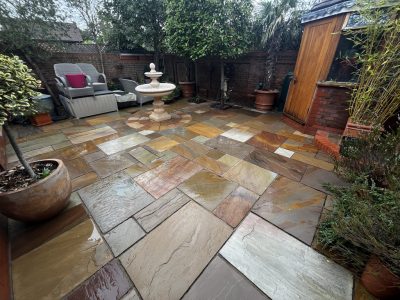
Winter doesn’t just make your patio look bad; it quietly wrecks it. Algae turns it slippery. Moss creeps into joints. Dirt gets ground into the surface. By the time spring arrives, what used to be a clean, usable space can feel like something you’d rather avoid.
The good news: most patios don’t need replacing; they just need the right approach. Here’s how to sort it properly.
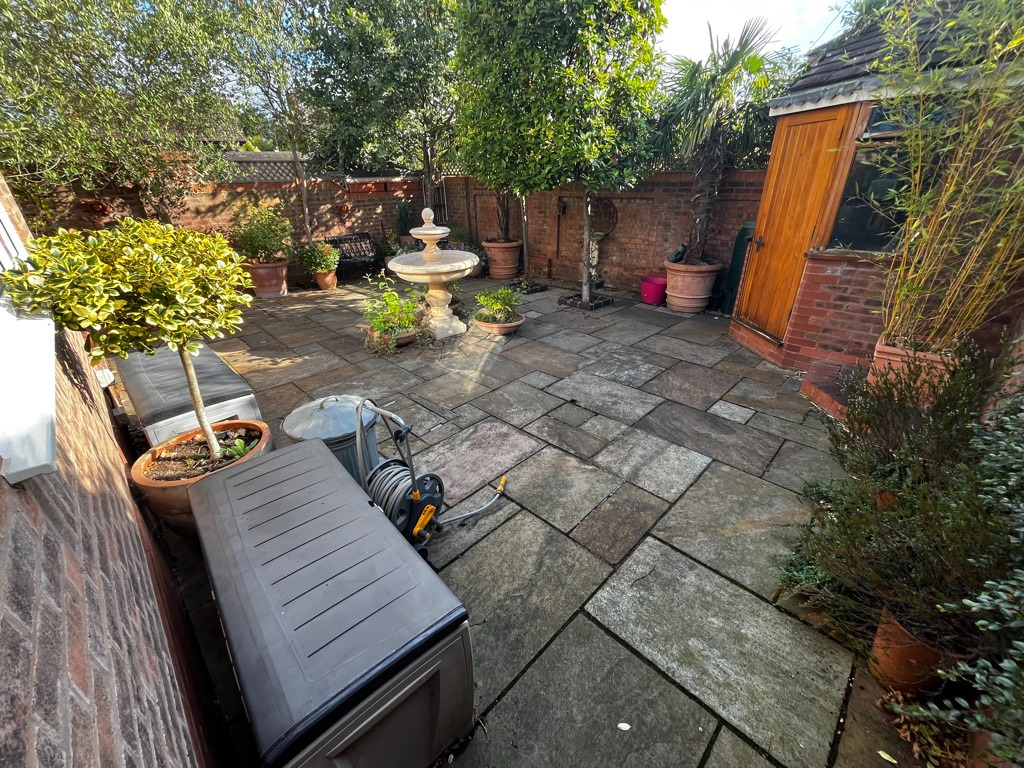
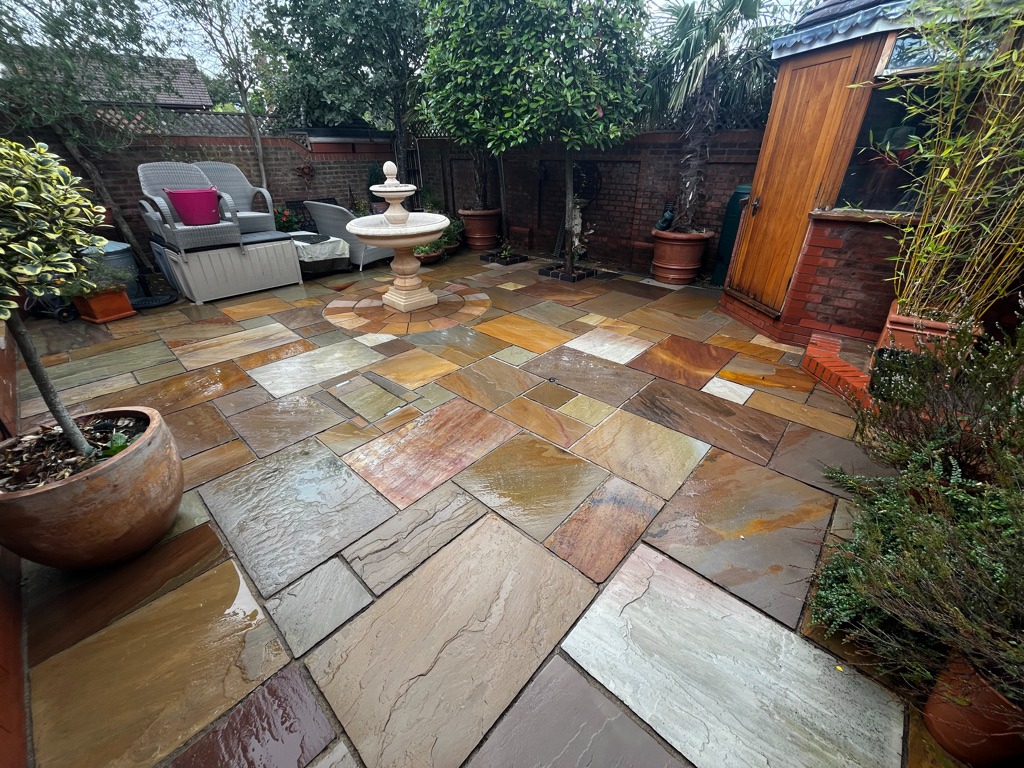
1. Clear Everything First (Don’t Skip This)
Before you touch a hose or cleaner, strip the area back completely.
Move:
- Furniture
- Pots
- BBQs
- Anything sitting on the surface
Then give it a proper sweep with a stiff brush. This does two things:
- Stops you missing hidden dirt patches
- Prevents mud getting dragged across already-clean areas later
Most people rush this, and it shows in the final result.
2. Deal With Moss and Weeds Properly
If you’ve got growth between slabs, don’t just blast over it. Pull or scrape out as much as you can first.
Why this matters:
- Cleaning solutions won’t penetrate properly
- Roots left behind will grow back fast
- Over time, this can loosen and shift your paving
If it’s heavily infested, this step alone can take a while, but skipping it guarantees a short-lived result.
3. Use the Right Cleaning Method for the Surface
This is where most people go wrong. Not all patios should be treated the same. Standard pressure washing can work well on some surfaces, but it’s not always the safest or most effective option.
For example:
- Concrete and hard paving can usually handle controlled pressure cleaning
- Delicate materials like sandstone are much more vulnerable
Using too much pressure on softer stone can:
- Etch and permanently damage the surface
- Leave visible lines or patchy areas
- Strip away the natural finish
That’s why for more delicate surfaces, a specialist softwash chemical treatment is often the better approach. This method breaks down algae, moss, and organic staining without the need for aggressive pressure, giving a deeper clean while protecting the stone.
The key is choosing the right method for the material—not just using whatever equipment you have.
4. Re-Sand Where It’s Actually Needed
After the patio cleaning, some surfaces will need re-sanding, but not all of them. This step is specifically for block paving, where jointing sand plays an important structural role.
Once the surface is fully dry, kiln-dried sand is brushed into the joints to:
- Lock the blocks in place
- Prevent movement
- Reduce weed regrowth
For other surfaces like natural stone patios, this step usually isn’t required—and in some cases, using sand incorrectly can cause more harm than good.
Knowing the difference is key to keeping your patio in good condition long-term.
So… Should You Do It Yourself or Call Someone?
It depends on what you’re dealing with.
DIY is usually fine if:
- The patio is lightly dirty
- You’ve maintained it regularly
- You’re confident using the right techniques
Bringing in a professional makes more sense if:
- The surface is heavily stained or slippery
- You’re dealing with delicate materials like sandstone
- It hasn’t been cleaned in years
- You want a consistent, long-lasting result
A proper clean can completely transform the space in a few hours—something that often takes a full weekend (or more) to attempt yourself.
If You Want It Done Properly
At Stourbridge Jet Clean, we tailor the cleaning method to the surface.
That means:
- Using controlled pressure cleaning where it’s safe and effective
- Applying specialist softwash treatments on delicate stone like sandstone
- Re-sanding only where appropriate—such as on block paving, where it’s needed for stability
The result is a deep, even clean without unnecessary damage or shortcuts.
If your patio’s looking tired and you want it sorted properly for spring, get in touch for a free quote.
Final Thoughts
Most patios don’t need replacing. They just need the right treatment for the material they’re made from.
Get that right, and you don’t just improve how it looks. you protect it for the long run.
If your patio is looking tired and you want to bring it back to its best for spring, it’s time to call in the local experts. Contact Stourbridge Jet Clean today to get a free quote. We’ll get your garden ready for the sunshine!
 Beautiful Patio Restoration in Stourbridge: Getting Ready for Spring