
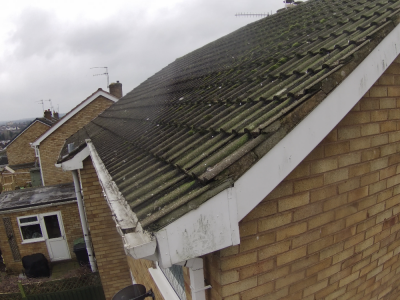
The Situation
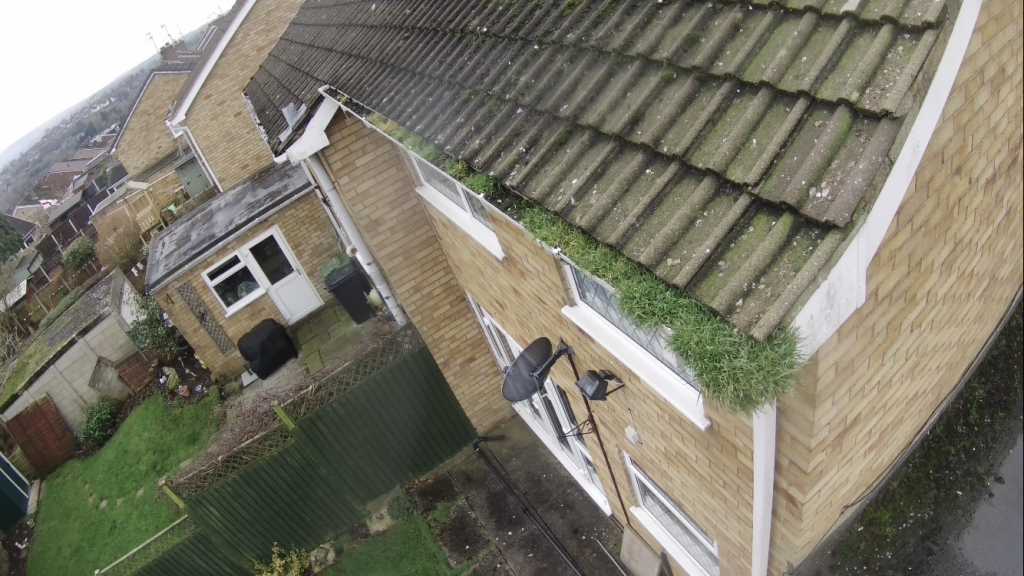
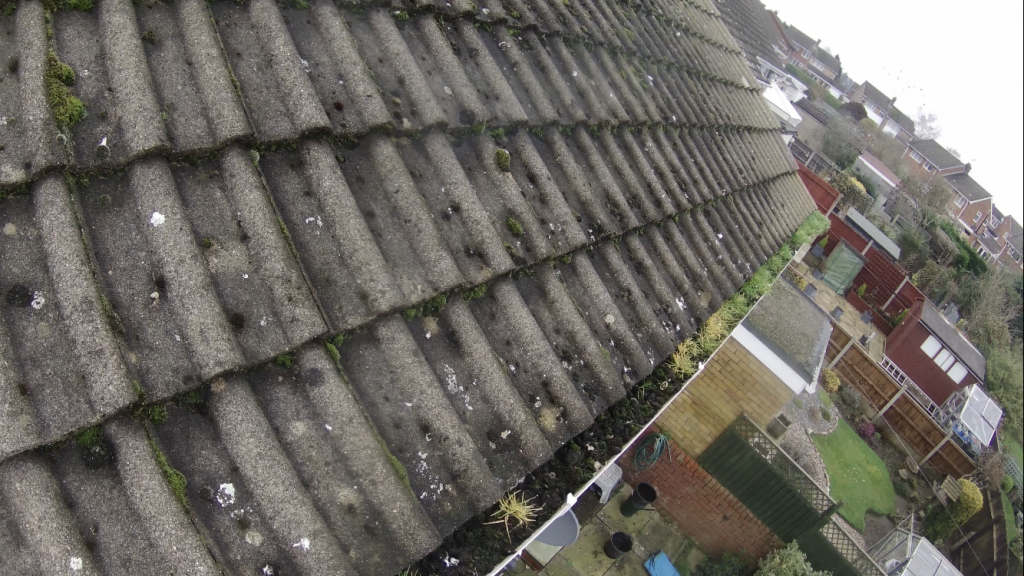
We attended a standard two-storey brick property that had developed a very common but damaging issue. The rear uPVC guttering wasn’t just blocked; it had effectively turned into a planter.
Grass and moss had taken full root inside the channel, creating a dense bed of compacted soil that was completely restricting water flow. You could actually see vegetation spilling over the edge from the ground. When you see grass growing out of your roofline, it tells you one thing immediately: maintenance is long overdue.
The Hidden Risk
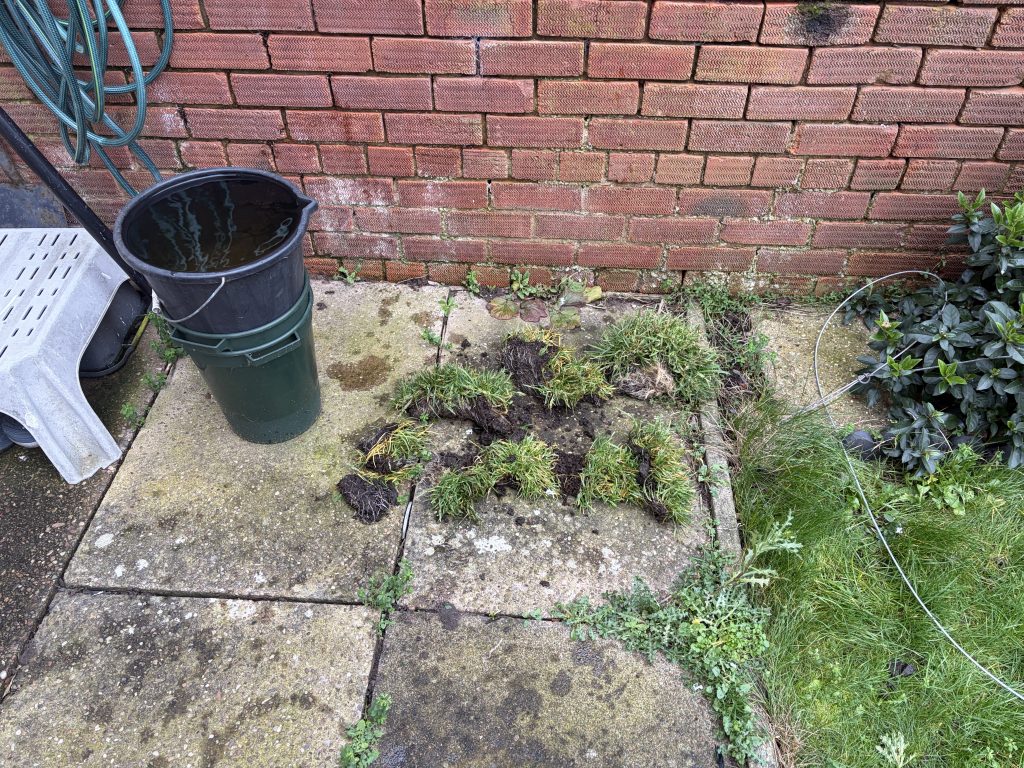
The problem here isn’t just that it looks untidy. The real issue is weight and water direction.
That compacted organic matter holds water like a sponge, adding significant strain to the gutter brackets and joints. More critically, because the rainwater had nowhere to go, it was forced to overflow down the brickwork. This is how serious problems start—saturating fascia boards, seeping behind soffits, and eventually causing damp patches inside the home or rotting the timber.
As we often say: Water doesn’t need force to cause damage; it just needs time.
Our Solution
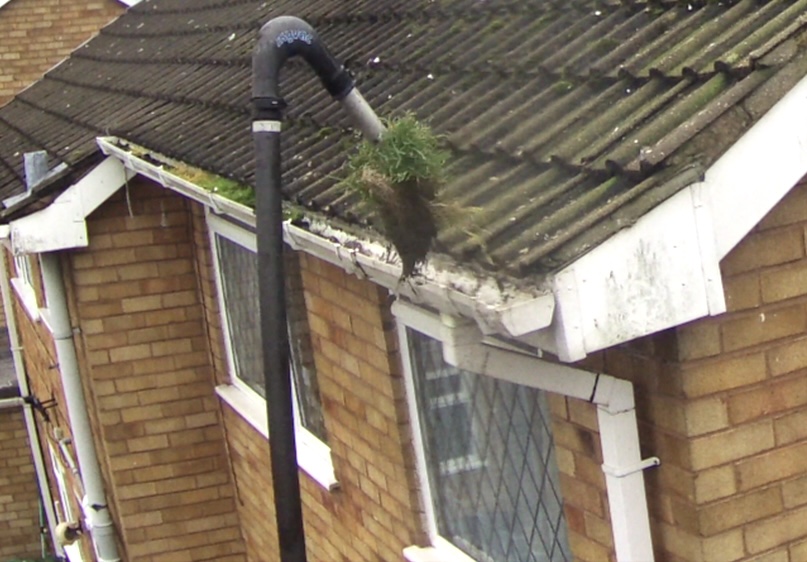
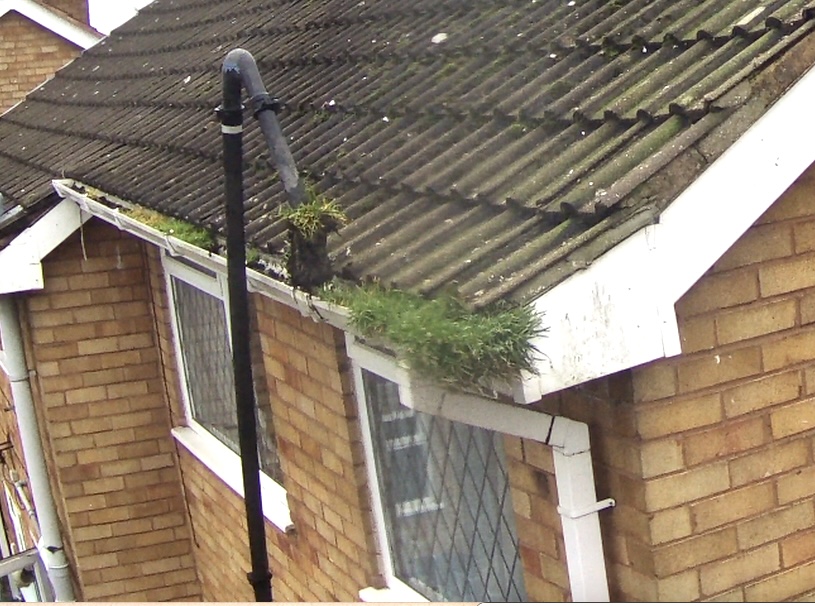
To clear this safely and effectively, we used our high-powered suction gutter vacuum system.
This approach has two major benefits. First, it extracts everything—rooted vegetation, moss, and soil—without us needing to lean ladders against the property or risk damaging the roof tiles. Second, it allows us to work entirely from ground level.
Once the bulk of the debris was removed, we verified that the downpipes were flowing freely to ensure the system could handle the next heavy rainfall. We also provided the homeowner with clear photographic evidence of the clean, giving them total peace of mind that the job was done right.
The Takeaway
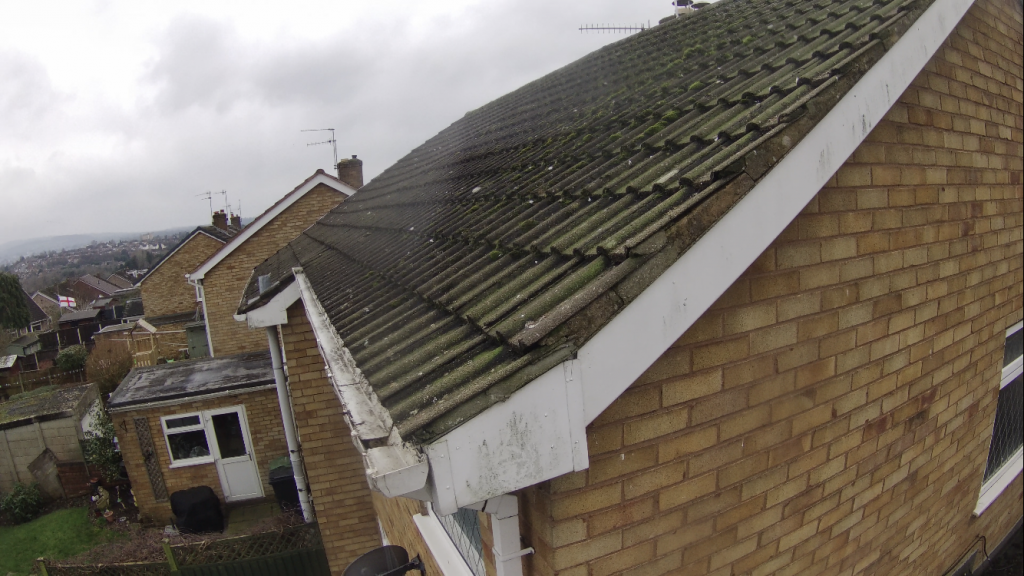
This job was a textbook example of why annual maintenance is cheaper than repairs. By clearing the gutters now, the homeowner avoided the much higher costs of fixing damp walls or replacing rotted fascia boards later down the line.
 Outdoor Patio Block Paving Restoration – Licensed Premises